 October 18, 2026
Devlog #06
The World You Hear
READ MORE
Simplicity Is Strength
"What can I add?"
Instead, I asked: "What can I take away?"
I've always believed that limitations create style. The fewer tools you allow yourself to use, the more creatively you're forced to think.
That's why I set a few rules from the very beginning. No complex 3D environments. No visual effects just because they're possible. No animation for the sake of animation.
Instead, I kept asking myself a different question.
How can a single movement feel more meaningful than ten? How can a room feel alive even when almost nothing moves?
The answer led me to a first-person point-and-click adventure. Not because it was the easiest choice. But because it allowed me to focus on what truly matters.
And the subtle interactions that slowly draw the player into the world.
I don't want players to admire the technology behind the game. I want them to forget it's there. To feel as if they're standing inside a real room. To believe there's a world waiting just beyond the screen.
A world they're not just looking at—but stepping into.
That's why I try to remove everything that isn't essential.
Every unnecessary effect. Every unnecessary animation. Every unnecessary sound.
Because I believe simplicity isn't the opposite of richness. Sometimes, it's what makes richness possible.
And perhaps the greatest challenge in creating this game isn't adding more.
October 18, 2026
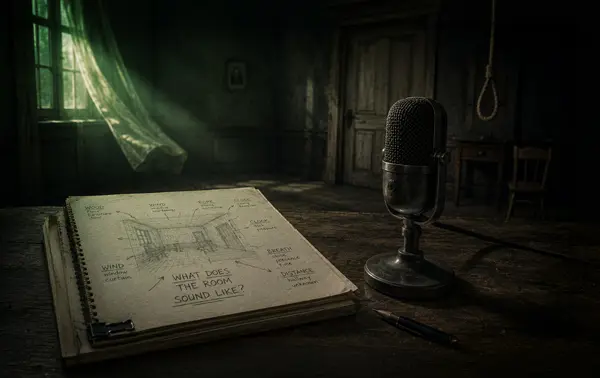
The World You Hear
READ MORE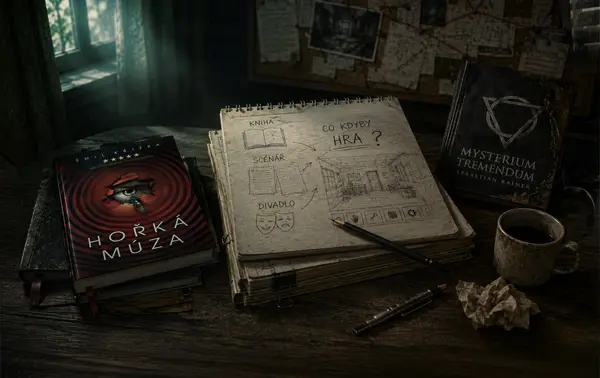 October 4, 2026
During the COVID pandemic, I wrote a novel called Bitter Muse.
READ MORE July 6, 2026
I've loved music for as long as I can remember.
READ MORE June 28, 2026
One thing has always bothered me about many point-and-click adventures.
READ MORE June 5, 2026
I've always loved games that could completely draw me in.
READ MORE